Glowing Ocean in Oman: How to Find the "Avatar World" on Your Own
Most people think that the world of Pandora, the planet where the action of Avatar takes place, exists only on movie screens. They are wrong. This world, contrary to appearances, was created based on phenomena from our own Earth. The creator of the film, James Cameron, as a great enthusiast of the oceans (who personally reached the bottom of the Mariana Trench), created the ecosystem of Pandora based largely on the terrestrial marine world.

Besides the floating mountains, the main recognizable thing in Avatar is the ubiquitous bioluminescence, visible especially in night shots. In the terrestrial marine world, it accompanies us at every step: the deeper we go, the more common it becomes. However, there are places on Earth where these extraordinary marine creatures surface and visit beaches in massive quantities. These places include Oman, the Maldives, and the Caribbean.
What Creates the Glow
Our beaches are visited by two types of organisms that react to movement with light:
Mini shrimp (ostracods)
Mini shrimp, known in Polish as malzoraczki (ostracods). They reach sizes from 0.5 to 2 mm. In reaction to danger, they "spit" a glowing mucus that stays on the skin like living sparks.
Dinoflagellates
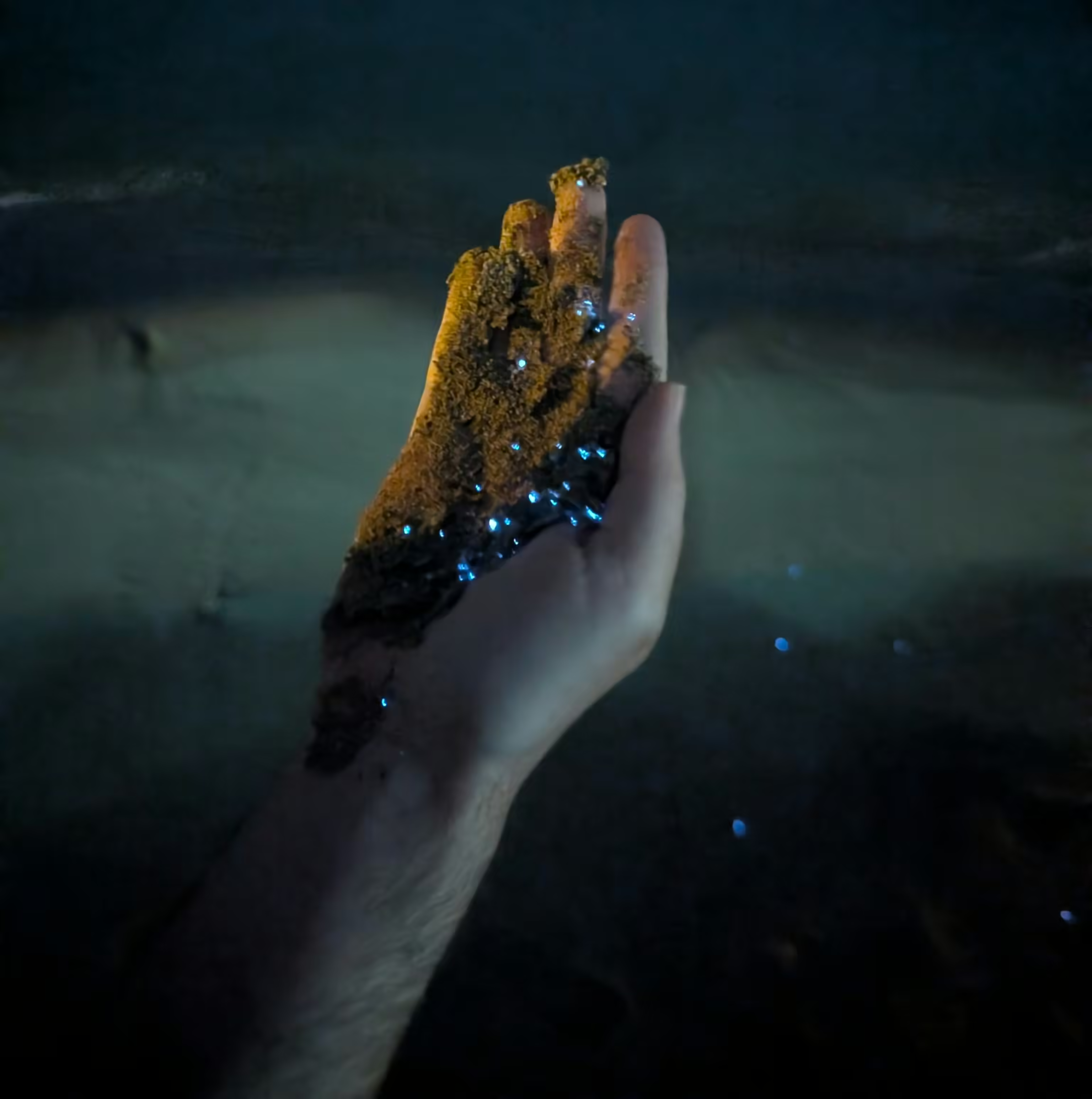
Dinoflagellates are microscopic algae. During the day they look like green water, but at night, under the influence of wave movement or your feet, they light up and create a blue glow.
How It Looks in Reality
Ostracods and dinoflagellates, unlike the Northern Lights for example, look significantly better in person than in photos. The Northern Lights can sometimes only be seen clearly through long exposure, and to the naked eye they can be barely perceptible. Here, it is the opposite: even the newest smartphones are often unable to capture this phenomenon, and the best cameras still do not convey its full magic.
What creates the biggest WOW effect is the incredible interactivity:
- It is not static light; it is a living, reacting organism.
- Glowing steps: while walking on the beach, the sand and water under your feet ignite.
- Wave effect: every incoming tide activates thousands of ostracods washed ashore, creating a blue line of fire.
- Wake behind a boat: the propeller can leave a giant glowing tail behind you.
- Interaction with nature: fish swimming in the bay can leave neon streaks behind them.
This world reacts to your movement with light exactly like on Pandora in Avatar.
Instagram vs. Reality
The shots you see on the internet are, in most cases, moments of extreme blooms of fauna and flora. Such an intense phenomenon usually occurs only for a few days a year, and no one can give you a guarantee for a specific date. In reality, instead of millions of blue lights, you might find only a dozen glowing dots.
It works exactly like the Northern Lights:
- You can come to the right place at the right time, but the show is still not guaranteed.
- In most cases, you will simply see a weaker version of what the videos promise.
- Online materials are often posted by people living there permanently or by professional photographers with advanced equipment. They show the best moments captured over long periods.
There are still smaller places, coves, and methods where you can observe this effect for many months, but you need patience and flexibility.
When and Where You Can See It
- Oman: season from October to March, with late November often being a strong window.
- Maldives: visible almost year-round, with peak season mainly from June to December.
- Puerto Rico (Mosquito Bay): permanent phenomenon, strongest in summer (June to August).
- Jamaica (Luminous Lagoon): year-round, often strongest during the dry season (December to April).
Why Oman Is the Best Destination for a Traveler from Europe
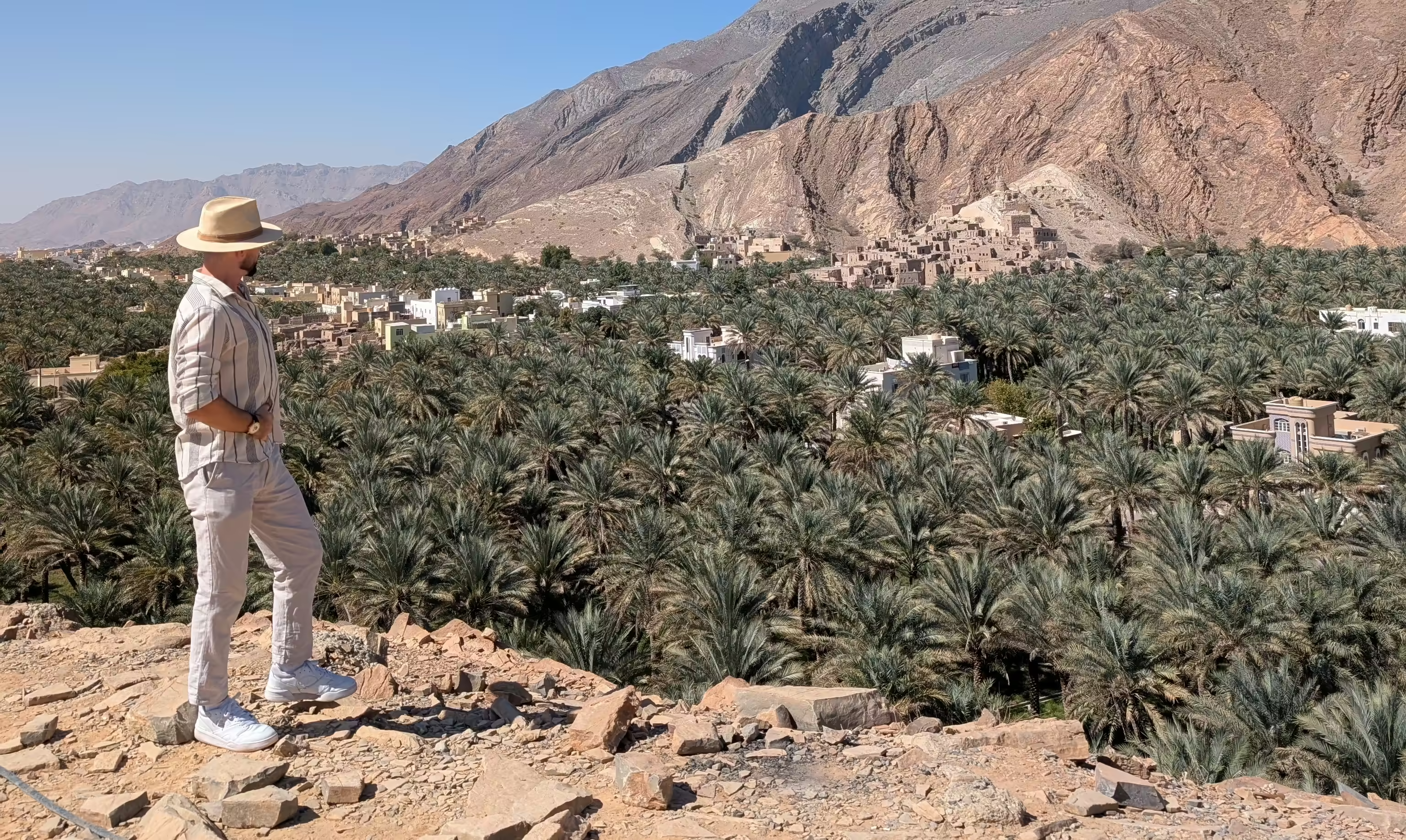
If your main goal is to see bioluminescence, and not just to check it off during a luxury holiday in the Maldives or Caribbean, Oman is hard to beat. It is probably the most accessible and cost-effective direction for many Europeans.
- Flight costs: Oman is much closer than many tropical alternatives.
- Accommodation and logistics: compared to private-island models, Oman gives broad flexibility.
- Freedom of discovery: hundreds of kilometers of coast allow moving between bays until conditions improve.
- Safety and culture: very high sense of safety and strong local hospitality.
Al Bustan and Qantab
As you can probably guess, we did not hit the strongest mass-bloom period. Searching online, we learned that blue light is often reported on popular beaches in Al Bustan and Qantab.
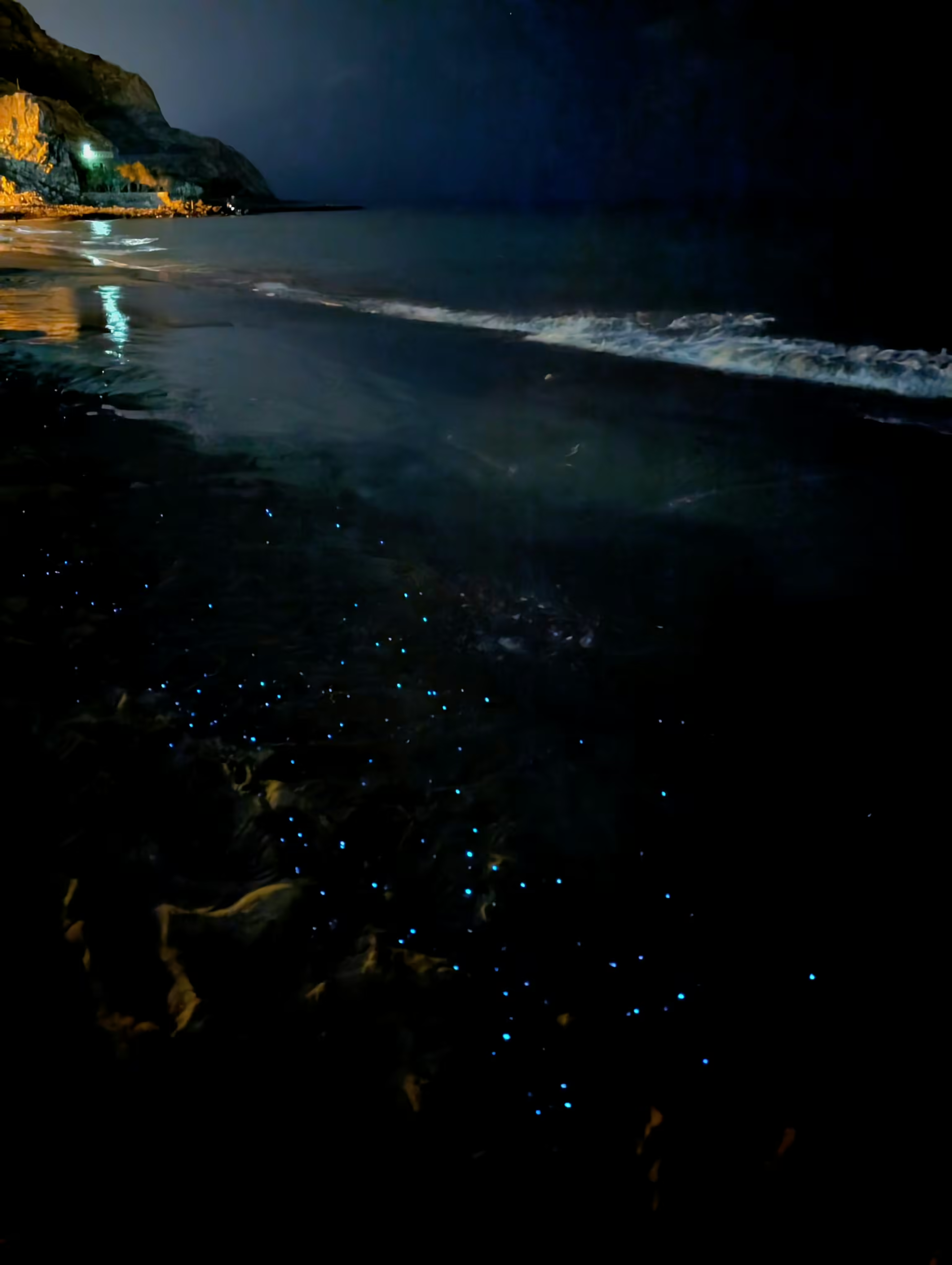
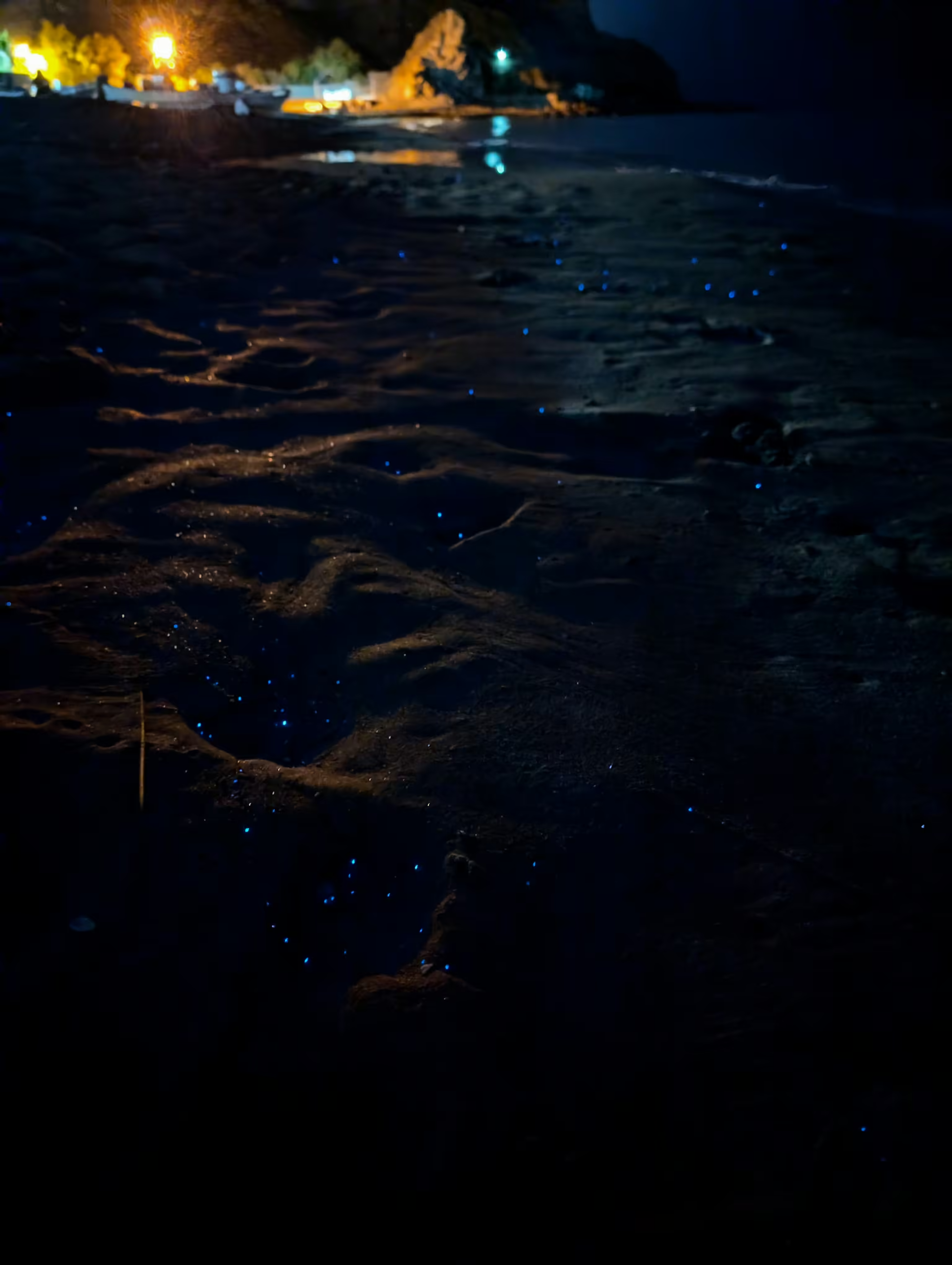
In Al Bustan, it is best to park at Bustan Resident Beach Car Parking. Near the parking lot, locals often gather for grills and picnics, so for darker conditions it helps to walk south toward the mountain side where light pollution is lower.
Our observations there:
- On the first day there were only single dots.
- We visited daily and only once saw a clear spike with hundreds of points.
- It was hard to link this to one obvious factor (moon, current, timing).
- Plankton concentration can change rapidly within hours, which makes the search exciting and demanding.
In Qantab, there are many parked boats and strong flashing lights, which can be distracting during observation. We saw similar intensity as in Al Bustan. The area is also known for local fishermen offering short paid trips to hidden coves.
23°31'01.0"N 58°44'33.2"E: Secret Spot
Without giving up, we drove south along the coast every day. Many bays are private and inaccessible from land, but this search led us to Bandar Al Khairan. One reason we focused there is proximity to mangroves, which support plankton-friendly conditions.
Most beaches there still had limited glow. But at one mountain-descent beach used for camping, we met a local father and daughter who pointed us toward another nearby area that had been very active two days earlier.
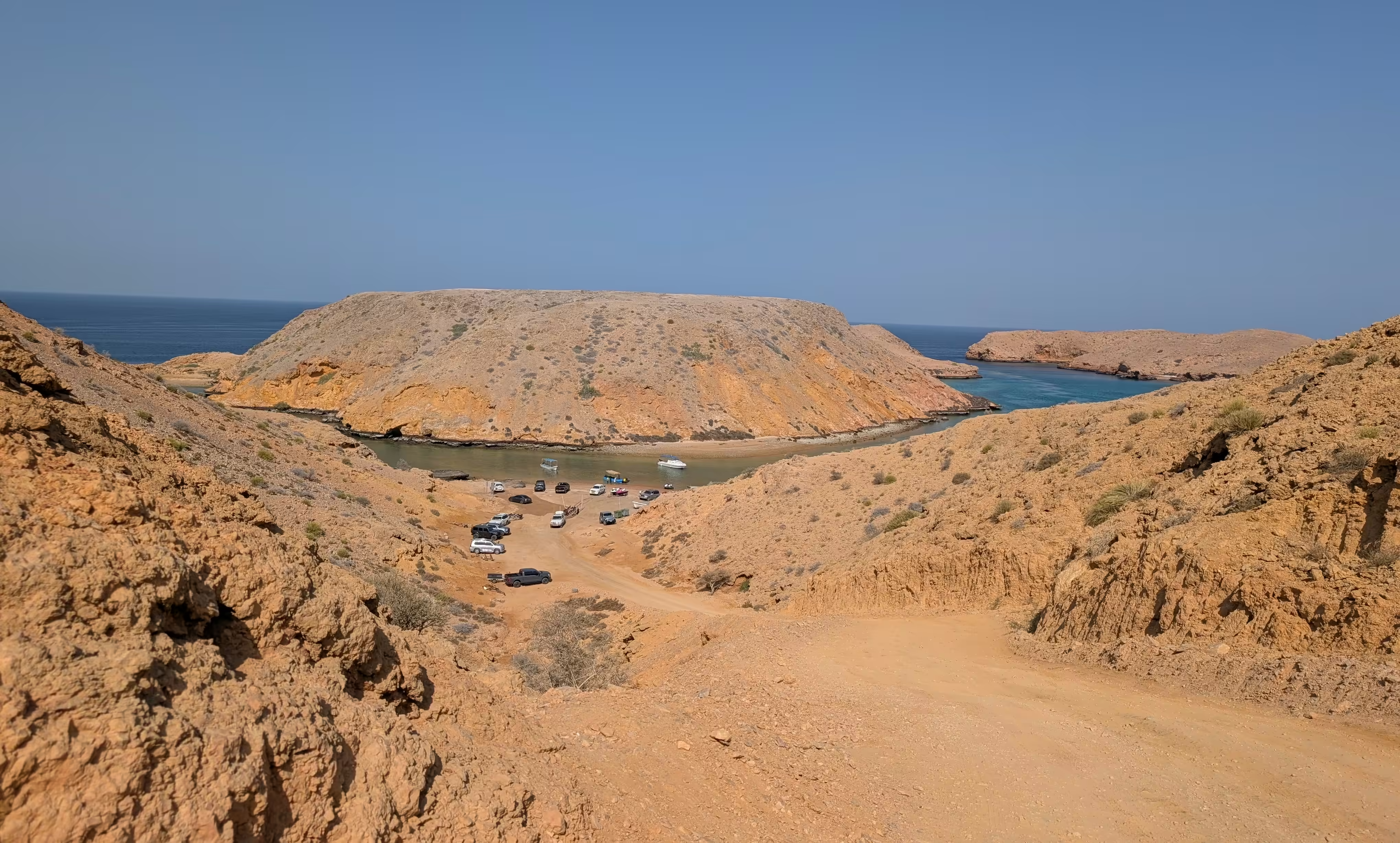
At first we saw only small points, but walking about 50 meters toward the rocks changed everything. Water hitting the rocks started triggering a much stronger visual reaction, with visible streaks from moving fish and significantly more activity than at our previous stops.
We returned there almost every evening, sometimes until 3 AM, testing conditions repeatedly by hand movement and shallow water disturbance.
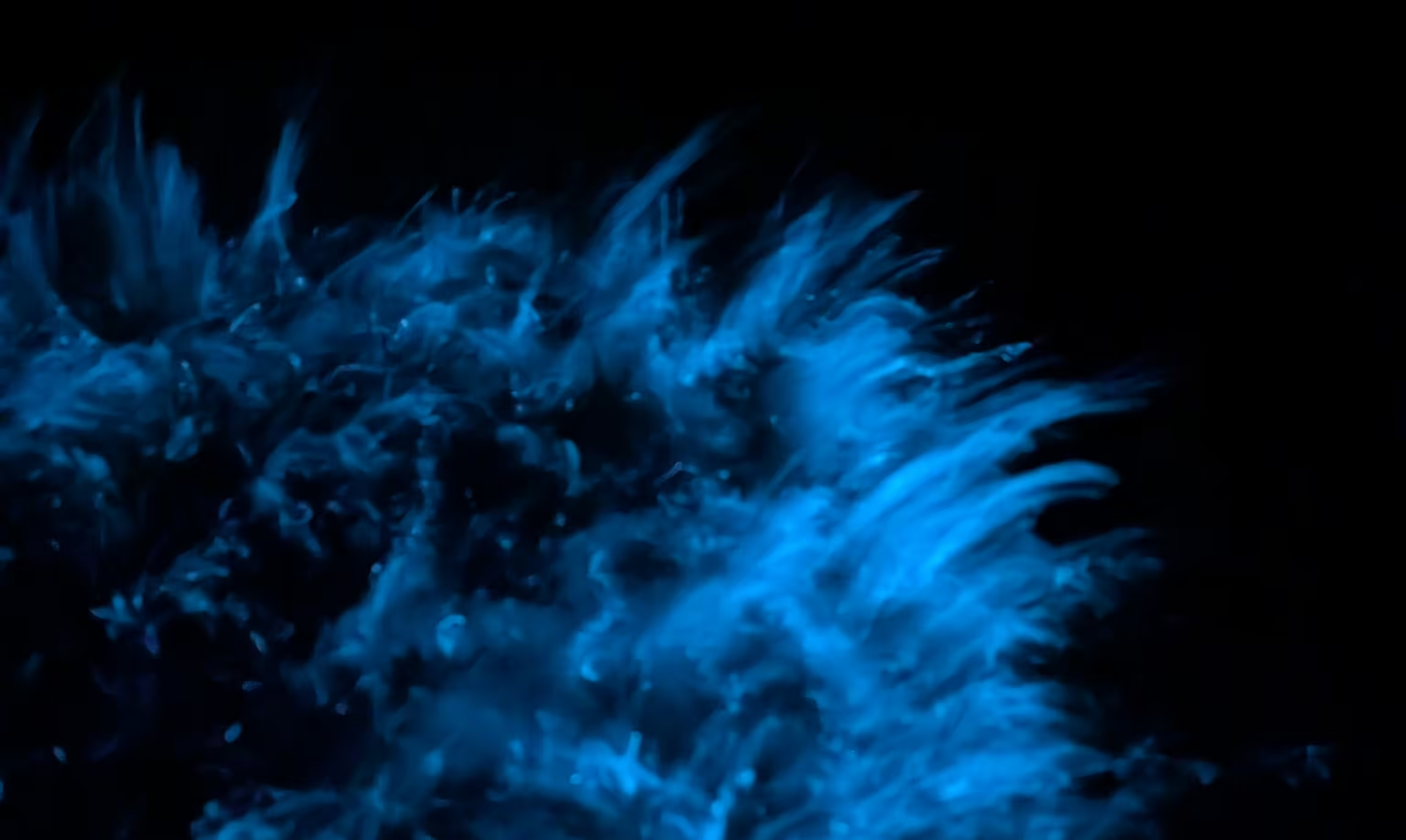
The darkness made phone capture difficult. In practice, do not expect consistent social media output without professional gear. This is primarily a live, in-person spectacle.
23°31'01.0"N 58°44'33.2"E: Drive to the Spot
If you do not have a 4x4, leave the car at the end of the asphalt and walk roughly 100 meters to the spot.
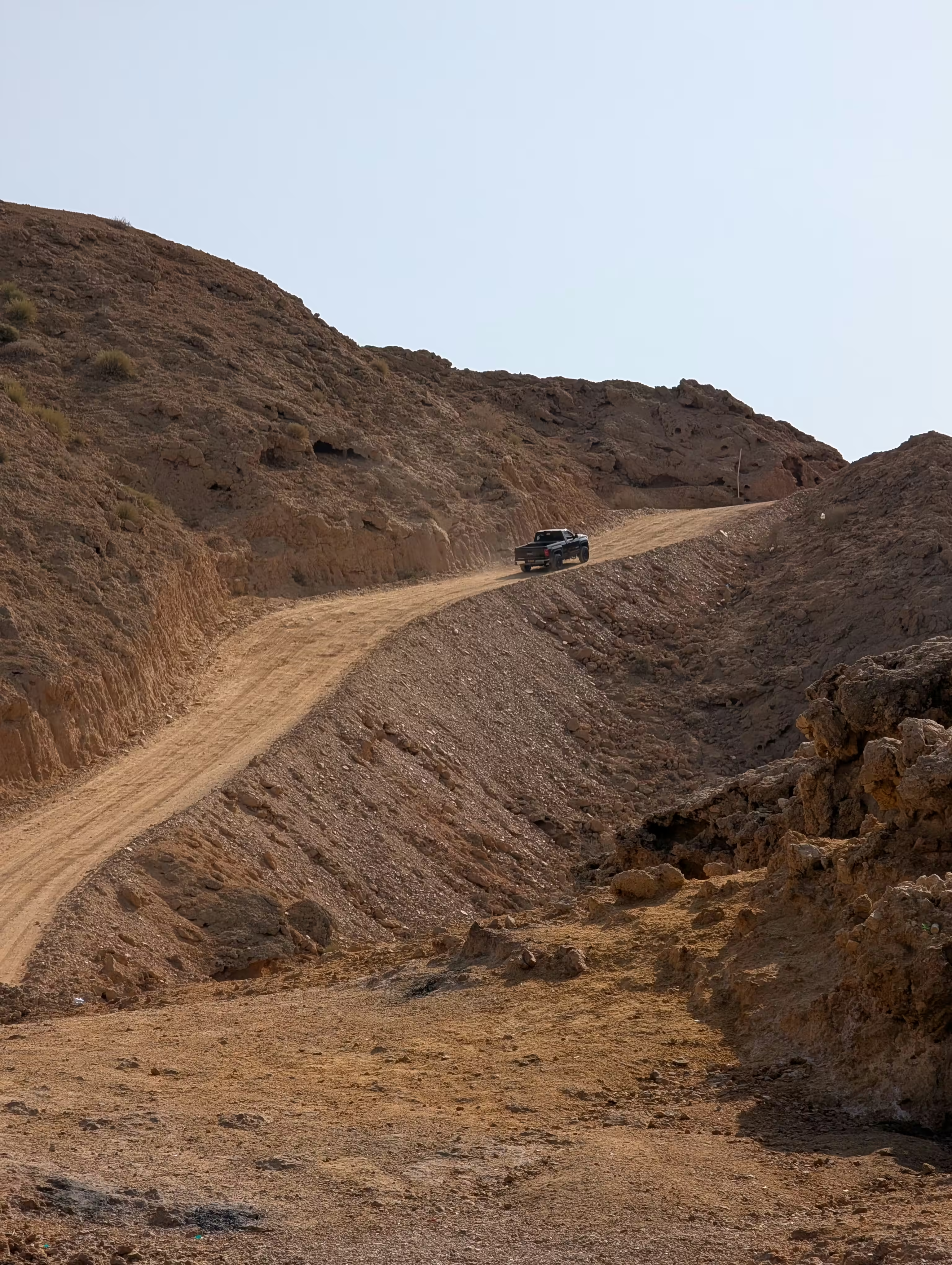
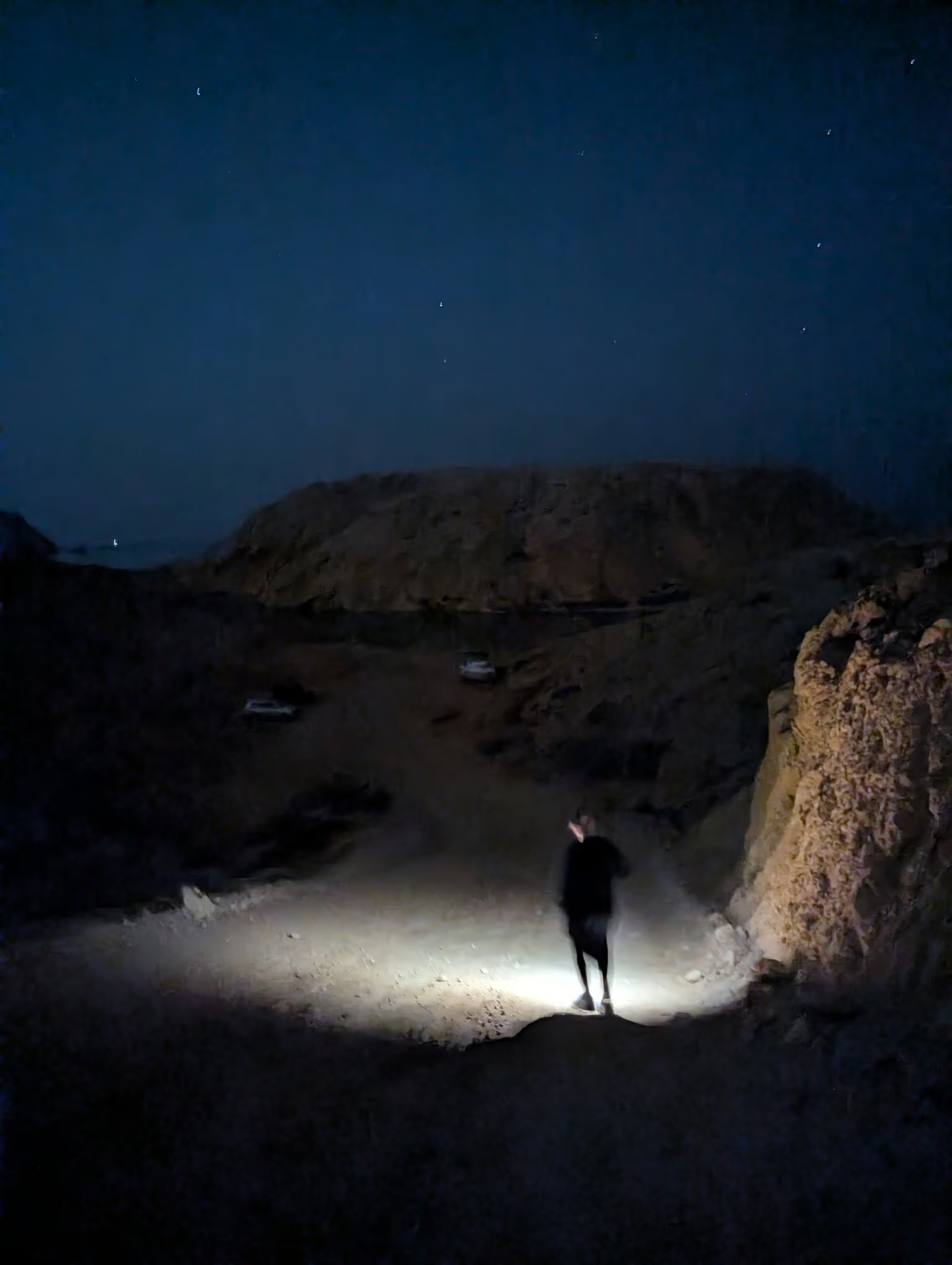
To get there, head to Bandar Al Khairan Viewpoint and walk to the beach point at: 23°31'01.0"N 58°44'33.2"E.
Algae vs. Shrimp
During the day, when we were not heading deep into the Omani mountains, we often walked along Qurum Beach. It is one of the main city beaches, active with people and sports. During one sunset walk, we noticed a patch of green water left by the tide.
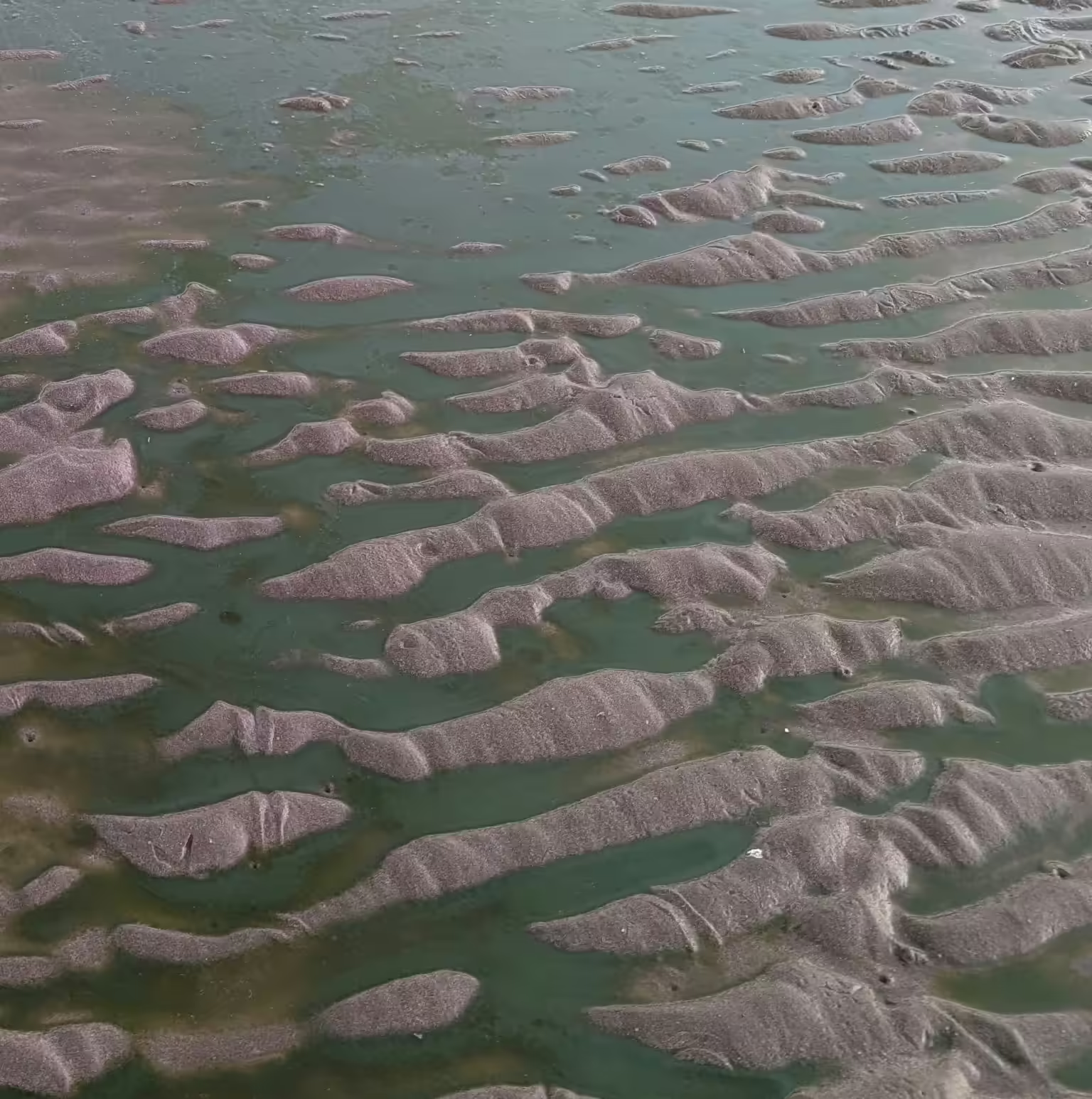
About an hour later we returned to the same point, and a simple touch was enough for the water to begin glowing, clearly visible despite nearby city lights.
Interestingly, on this long beach we found such a spot only once, in a small area. Mangroves nearby may play a role. The key is to keep searching and treat this like aurora hunting: patience first, luck second.
Personally, I still prefer the ostracod effect. Instead of glowing liquid, you get countless tiny creatures reacting to every movement. They are not a static mass; you can see behavior and motion that feel almost unreal.